FAQ
Our Tiny Home FAQ answers common questions about zoning, insurance, financing, and building.
What Certifications Do Our Tiny Homes Have?

At Beechwood Tiny Homes, all of our tiny homes are built to meet NOAH Certification Standards. We are a NOAH-certified builder, which means every home we construct is reviewed against nationally recognized standards for safety, structural integrity, and energy efficiency.
NOAH certification goes beyond minimum code requirements. It provides third-party verification that your tiny home was built correctly, consistently, and with long-term livability in mind.
Here’s why NOAH certification matters:
Peace of mind
NOAH certification means your home has been reviewed by trained, professional inspectors who understand tiny home construction. You can feel confident knowing your home was built safely and responsibly.
Smoother financing and insurance
Many lenders and insurance providers are more comfortable working with NOAH-certified homes. Certification often leads to fewer questions, clearer underwriting, and better access to financing and insurance options.
Comprehensive inspections
NOAH inspections cover applicable national building, plumbing, electrical, and RV codes, depending on how the home is classified. This thorough approach can be especially helpful when navigating zoning, insurance, or financing requirements.
A commitment to quality
We’ve worked with NOAH for several years because of their professionalism, consistency, and deep knowledge of tiny homes. Their certification aligns with how we already build—carefully, intentionally, and with long-term performance in mind.
Choosing a NOAH-certified tiny home from Beechwood Tiny Homes means choosing a home built with accountability, durability, and your safety as a priority.
Ready to learn how NOAH certification fits into your plans? Contact us and we’ll walk you through the details.
Looking for more insight? Visit our Resource Page for blog articles, practical tips, and updates to support you throughout your tiny home journey.
What makes Beechwood Tiny Homes different from other tiny home builders?
At Beechwood Tiny Homes, we focus on how a home actually performs, not just how it looks. Every build starts with solid fundamentals—proper insulation, ventilation, framing, and durable materials—so your tiny home is comfortable, efficient, and built to last.
We don’t use one-size-fits-all designs. Each home is thoughtfully tailored to your needs and to the climate where it will live, whether that means cold winters, hot summers, or everything in between.
What truly sets us apart is our commitment to continual improvement. We stay current with evolving building practices, codes, and innovations in the tiny home space, and we apply that knowledge directly to our builds. From early planning through final delivery, we guide you through the process with clear communication and practical advice.
If you’re ready to explore your options, contact us and let’s talk about building a tiny home that’s done right.
Our Tiny Home Builds
Our Tiny Home Builds
Each of our tiny home builds is designed for long-term living and built to meet real-world building codes. We tailor every home to your property, lifestyle, and local regulations so you’re not guessing what will be allowed or how it will perform over time.
Tiny Homes on Wheels (THOW)
Our Tiny Homes on Wheels are designed for full-time living and flexibility, without sacrificing comfort or durability. Depending on how your home will be classified locally, we offer two recognized certification pathways:
-
Movable Tiny Home (ANSI 119.5)
Built to the ANSI 119.5 standard and aligned with IRC provisions from the 2015 era, this option is commonly used for movable tiny homes that can support year-round living where permitted. -
Dwelling Standard (IRC 2021–based)
Built to the IRC 2021 dwelling standard, this option treats the tiny home as a residential structure from a safety and performance standpoint, even though it remains on wheels. Many jurisdictions allow THOWs built this way to be used as permanent dwellings.
Both options are intended for full-time use. The difference is how the home is reviewed and permitted, not how it functions day to day. We help you choose the path that aligns with your goals and local requirements.
Foundation Tiny Homes
Foundation tiny homes are built on-site on a permanent foundation and can be designed to meet local building codes as either a primary residence or an Accessory Dwelling Unit (ADU). They offer the comfort and familiarity of traditional construction with the efficiency and thoughtful design of a tiny home.
This option is ideal for homeowners looking to downsize, add housing for family, or create long-term rental opportunities.
Container Homes
Container homes are permanent residences built using new or carefully selected shipping containers as a structural starting point. When designed correctly, they offer exceptional strength, durability, and a clean, modern look.
Our container homes are fully finished for comfortable, year-round living. We modify each structure to meet local building codes, including proper insulation, ventilation, windows, and interior finishes. These homes are designed for people who want a durable, long-lasting home with a distinctive style—not a novelty build.
Not sure which tiny home is right for you?
We design code-compliant tiny homes for full-time living, not guesswork. Explore your options and build with confidence. Talk with our team about zoning, build options, and certification paths.
👉 Contact us
What Should I Know About Tiny Homes?
Thinking about tiny home living?
Here are the key things to understand before getting started.
Size, Layout, and Everyday Comfort
Most tiny homes range from 100 to 400 square feet, which means smart design is essential. Efficient layouts, built-in storage, and multi-purpose furniture help make small spaces feel comfortable and practical for daily living.
A well-designed tiny home should feel intentional and livable, not cramped.
Zoning, Codes, and Where You Can Live
Zoning and building rules vary widely by location and are often the biggest hurdle for tiny homeowners.
Before placing a tiny home, it’s important to understand:
-
How your local zoning defines a tiny home
-
Whether full-time living is allowed
-
What building standards or certifications apply
Understanding these rules early can prevent costly surprises later.
If zoning feels confusing, our free planning checklist breaks it down step by step.
Cost, Value, and Lifestyle Changes
Tiny homes are often more affordable than traditional houses, but pricing varies based on size, materials, certifications, and customization.
Just as important is the lifestyle shift. Tiny living encourages simpler routines, lower energy use, and a focus on what you truly need. For many people, that’s part of the appeal.
Learn More and Take the Next Step
Thinking About a Tiny Home? Start Here.
Our free planning checklist helps you avoid common mistakes and understand what really matters first.
Grab the checklist to see if tiny living makes sense for you.
Helpful Resources
-
Learn more about our NOAH-certified tiny home models:
https://beechwoodtinyhomes.com/models/ -
Read practical tips and articles on zoning, building, and tiny home living:
https://beechwoodtinyhomes.com/tiny-home-building-resources/ -
Join the conversation and learn from others exploring tiny living:
https://www.facebook.com/share/g/CMz5WwuVLjp78WFf/
Need Personal Guidance?
Not sure if a tiny home will work where you live?
Contact us and we’ll help you understand your options:
https://beechwoodtinyhomes.com/contact-us-2/
Can I Tour a Tiny Home?
Yes! We offer tours of our construction space by appointment. To see one of our custom tiny homes on wheels or modular homes, contact us via our contact page or call (833) 333-8469.
Are Your Tiny Homes Accessible?
Absolutely! We design ADA-compliant tiny homes, offering accessible options for those with limited mobility or sensory sensitivities. Let us know your specific needs, and we can customize your tiny home for ease of access.
Contact us today to learn more!
Need more information? Explore our Resource Page for articles, tips, and updates to help you on your tiny home journey.
Getting Your Tiny Home: Delivery and Setup Options Explained
Delivery, Transportation, and Setup
Once your tiny home is complete, you can either pick it up directly from our facility or have us coordinate delivery to your site.
Tiny Homes on Wheels (THOW) are delivered fully assembled and ready to park, making placement straightforward once your site is prepared.
Container Homes are permanent structures and typically require specialized transportation and, in some cases, on-site equipment for placement. Depending on your property and access, this may include cranes or other setting equipment. We’ll walk through those requirements with you in advance so there are no surprises.
If you’d like a hands-off experience, delivery and setup coordination can be included in your contract. Prefer to manage parts of the process yourself? You’re welcome to work with your own transportation and site contractors. We’re also happy to help connect you with experienced local professionals for site preparation, placement, and utility connections.
Ready to plan the next step? Contact us to talk through delivery options and make sure your site is ready for your tiny home’s arrival.
How can I pay for my tiny home?
Payment Options
We offer several payment options to make the process straightforward and transparent. Accepted payment methods and payment timing are defined in your contract and invoices, which outline deposit amounts, milestone payments, and due dates.
Payments may be made using approved electronic payment methods, ACH transfers, or cashier’s checks, as specified in your agreement. An initial non-refundable down payment is required before design work or materials are ordered, with remaining payments due according to the agreed-upon billing schedule.
When permitted, checks can be mailed to:
Beechwood Tiny Homes
16 Old Troy Road
Fitzwilliam, NH 03447
All payment details, including amounts and due dates, will be confirmed in writing prior to any funds being due. Title to the tiny home remains with Beechwood Tiny Homes until full payment is received, as outlined in the sales agreement.
If you are interested in financing your tiny home, please visit our Financing FAQ or Financing Blog for general information about third-party loan options. Financing is subject to lender approval and is not provided directly by Beechwood Tiny Homes.
What are the best financing options for a tiny home?
Tiny Home Financing – Borrower Summary
This summary explains, in plain language, how tiny homes are commonly financed and what to expect when working with lenders. It is intended to help borrowers have productive conversations with banks, credit unions, and specialty lenders.
How Tiny Homes Are Financed at Purchase
Tiny homes constructed on trailers are typically financed as personal property at the time of purchase. Common loan options include RV-style loans or chattel (personal property) loans. These loans are secured by the titled tiny home itself and do not require land to be included in the transaction.
Placing the Tiny Home on Land
Placing a tiny home on land does not automatically make it real estate. Even if the home is used full-time, it remains personal property unless it is permanently affixed to a foundation and the title is legally surrendered.
Converting to Real Property in New Hampshire
In New Hampshire, a tiny home may be converted to real property if it is permanently installed on a code-compliant foundation on land owned by the same person. This process typically involves removing the wheels and towing equipment, permanently connecting utilities, surrendering the title, and recording an Affidavit of Affixture with the county.
Mortgage Financing After Affixture
After a tiny home has been legally affixed to land and converted to real property, many lenders will consider mortgage-style financing. This is similar to how manufactured or mobile homes are treated once they are permanently installed and legally converted to real estate. Mortgage approval depends on the lender’s requirements, including appraisal, zoning, and code compliance.
Common Borrower Path
Many borrowers choose to finance the tiny home initially as personal property and later refinance into a mortgage after permanent installation. This two-step approach allows flexibility while land development and permitting are completed.
For more options and details, check out platforms like Tiny House Alliance USA and finder.com, which provide comprehensive lists of tiny home lenders and the types of financing they offer. You can explore RV loans, personal loans, and even contractor financing through various institutions(Tiny House Alliance USA)(Tiny House Society)(finder.com).
Need more information? Explore our Resource Page for articles, tips, and updates to help you on your tiny home journey.
***Note: Financing terms and eligibility vary by lender. Borrowers should consult directly with their lender to determine available options.***
Finding Insurance for Your Tiny Home
Finding the right insurance for your tiny home is an important step in protecting your investment. The good news is that more insurance providers now offer coverage for tiny homes, especially when they are built to recognized standards.
At Beechwood Tiny Homes, we are a NOAH-certified builder, which often makes the insurance process smoother. Certification helps insurers understand how the home was built and gives them confidence that it meets nationally recognized safety and construction standards.
Tiny Home Insurance Options in the Northeast
For homeowners located in the Northeast, or planning to place their tiny home in this region, the following providers are commonly used and more familiar with insuring alternative or non-traditional housing in these states. Coverage availability and requirements vary, so reviewing our related articles is the best way to understand fit.
-
Foremost Insurance Group – Often a good option for stationary tiny homes
Each provider approaches tiny homes differently depending on whether the home is on wheels, permanently placed, or used as a primary residence. Our articles break down those distinctions so you know what questions to ask before applying.
Nationwide Tiny Home Insurance Providers
If you’re planning to relocate your tiny home, travel with it, or live outside the Northeast, these providers may offer broader or more flexible coverage options across multiple states:
These providers often specialize in tiny homes on wheels or alternative housing, but coverage terms can vary significantly by state and use case.
Want a deeper breakdown of how tiny home insurance works and what insurers typically look for? Read our guide:
Insuring Your Tiny Home: What You Need to Know
Why NOAH Certification Matters for Insurance
Insurance companies want to understand risk. A NOAH-certified tiny home provides third-party verification that the home was built to nationally recognized safety, structural, and energy standards.
For many insurers, this can:
-
Reduce questions during underwriting
-
Expand coverage options
-
Make the approval process more straightforward
At Beechwood Tiny Homes, every certified build is constructed with these standards in mind, helping you approach insurance with more confidence.
Ready to Explore Your Insurance Options?
If you have questions about insuring a tiny home, understanding certification requirements, or figuring out which providers may be a good fit for your situation, contact us. We’re happy to point you in the right direction and help you prepare before reaching out to an insurer.
For deeper dives into insurance providers, certifications, and tiny home ownership topics, visit our Resource Page. Our articles walk through the details so you can make informed decisions at every step.
Navigating Zoning Regulations
-
Zoning can feel like a maze, with every municipality applying its own rules and interpretations. The good news is you don’t have to figure it out on your own, and you have more tools available than ever.
AI platforms like ChatGPT (https://chat.openai.com) and Google Gemini (https://gemini.google.com) can be great starting points for learning basic zoning terms, understanding common regulations, and generating questions to ask your local planning office. They’re especially helpful for early research and general education.
That said, AI can’t replace local knowledge or professional judgment. That’s where Beechwood Tiny Homes comes in. We offer a consulting service to help you interpret local zoning requirements, identify potential challenges, and understand what applies to your specific property and municipality. If a situation calls for legal review, we’ll let you know and recommend bringing in a qualified professional.
For personalized guidance, reach out to us at info@beechwoodtinyhomes.com and we’ll help you move forward with clarity.
Looking for more background information? Visit our Resource Page for articles, tips, and updates to support you throughout your tiny home journey.
Note: All guidance provided is informational only and does not replace legal counsel. We will recommend legal review when zoning interpretations are unclear or complex.
Can I Use an Existing Trailer for My Tiny Home?
At Beechwood Tiny Homes, we build every Tiny Home on Wheels on a brand-new, purpose-built trailer. That matters because the trailer is the foundation of your home. Starting with new equipment helps ensure proper weight balance, reliable braking, and overall road safety from day one.
Our trailers are designed to meet DOT requirements, so your home is built with legal transport and long-term safety in mind. The goal is simple: your tiny home should be road-ready, dependable, and built on something you can trust.
Some DIY builders choose to reuse older trailers, which can work in certain situations. But it’s important to know exactly what a trailer is rated for and whether it meets current safety and licensing standards. Weight limits, axle ratings, and compliance rules all play a role in whether a tiny home can be safely and legally moved.
If you have questions about trailer requirements or want to understand how we approach safety in our builds, contact us and we’ll be happy to talk it through.
For more helpful information, visit our Blog Article for tips, and updates on tiny home trailers and DOT rules.
If you’d like to review federal trailer safety guidelines directly, you can also explore the FMCSA website.
How do tiny homes hold their value?
Tiny homes can hold their value well when they’re thoughtfully designed, properly built, and well maintained. Like any home, resale value depends on several factors, including overall condition, build quality, and how the home was originally constructed.
Homes built to recognized standards, such as NOAH certification, tend to be more appealing to future buyers because they offer documented safety, structural integrity, and energy efficiency. Buyers are also more confident in homes that were built with zoning and code compliance in mind, whether the home is on wheels or intended for permanent placement.
Routine maintenance plays an important role as well. Keeping systems in good working order and addressing wear early can help protect your investment over time.
While no home is guaranteed to appreciate, building with quality materials, proper certifications, and long-term livability in mind puts you in a much stronger position if you ever decide to sell.
Looking for more insight on planning, building, and long-term ownership? Visit our Resource Page for articles, tips, and guidance to help you make informed decisions throughout your tiny home journey.
What maintenance is required for a tiny home?
Tiny homes require much of the same routine care as any other home. Regular maintenance helps protect your investment and keeps everything working as it should over the long term.
Common upkeep includes checking for leaks, inspecting the roof and windows, and keeping plumbing and electrical systems in good condition. Staying on top of small issues early can help prevent bigger repairs later.
For Tiny Homes on Wheels, there are a few additional things to watch. This includes periodic checks of the trailer, tires, axles, and connections to make sure the home remains safe and road-ready when it needs to be moved.
We provide a clear, easy-to-follow maintenance guide with every home so you know what to look for and when. Most tasks are straightforward and can be handled as part of a normal seasonal routine.
If you ever have questions or need guidance, contact us for advice or to discuss service options.
For more tips and long-term ownership guidance, visit our Resource Page for articles, updates, and practical information to support your tiny home journey.
How do I connect utilities to my tiny home?
For Tiny Homes on Wheels (THOW), utility connections are most often handled through RV-style hookups for water, electricity, and sewer. This setup allows for flexibility and makes it easier to relocate the home when needed.
If a THOW is placed in a more permanent location, utility connections can be installed much like a traditional home, using standard residential hookups for water, power, and sewer. In these cases, we coordinate with local, licensed contractors to ensure everything is connected safely and in compliance with local requirements.
For permanently placed homes, including THOWs that won’t be moved regularly, we often recommend a crawl space or similar access beneath the home. This makes it easier to reach utilities in the future for maintenance or upgrades.
Have questions about utility options or what your property may need? Contact us and we’ll help you understand the best approach for your site.
Looking for more guidance? Visit our Resource Page for articles, tips, and updates to support you throughout your tiny home journey.
How eco-friendly are Beechwood Tiny Homes?
Sustainability is built into how we design and construct every Beechwood Tiny Home. From materials to systems, our goal is to reduce environmental impact while creating a home that’s comfortable, durable, and efficient for everyday living.
We prioritize eco-conscious building materials, including low-VOC paints and finishes to support healthier indoor air quality, responsibly sourced wood, and energy-efficient appliances that help reduce ongoing power use. These choices not only lower environmental impact but also contribute to a more comfortable living space.
Our tiny homes can also be designed with renewable and low-impact systems in mind. Depending on your goals and location, options may include solar-ready electrical systems, rainwater collection, and composting toilets. These features make it easier to live off-grid, reduce utility dependence, or simply lower your overall footprint.
Just as important, the small size of a tiny home naturally uses fewer resources to build, heat, and cool compared to a traditional house. Thoughtful design and efficient layouts mean less wasted space and more intentional living.
If you’re interested in sustainable building practices or want to explore how green technologies could fit into your custom tiny home, contact us and we’ll walk you through the options.
Looking for more insight on tiny home design, building, and long-term living? Visit our Resource Page for articles, tips, and updates to support your tiny home journey.
What customization options are available for my tiny home?
One of the biggest benefits of building with Beechwood Tiny Homes is the ability to customize your home so it fits how you actually live. We don’t take a one-size-fits-all approach. Instead, we work with you to design a tiny home that reflects your style, priorities, and long-term plans.
You can personalize many aspects of your tiny home, including interior finishes like flooring, countertops, cabinetry, and fixtures. Whether you prefer a clean, modern look or something more warm and traditional, we’ll help you choose materials that balance durability, function, and design.
We also offer options for eco-friendly materials and energy-efficient appliances, allowing you to reduce energy use while maintaining everyday comfort. If sustainability is important to you, we can help guide those selections from the start.
Beyond finishes, customization can extend to systems and features. Depending on your goals, this may include smart home technology, solar-ready or off-grid systems, upgraded insulation, or layout adjustments that better support full-time living.
If you’re not sure where to start, that’s okay. Many customers begin with one of our proven designs and then customize from there, combining inspiration with practical upgrades.
Ready to talk through your ideas or explore what’s possible? Contact us to discuss your custom design preferences or to view our pre-designed models for inspiration.
Is there a place I can go to find out where to place my tiny home?
Yes. Finding a legal and practical place to put a tiny home usually starts with good research. While zoning and regulations ultimately come down to local rules, there are a few reliable tools that can help you narrow your options and understand what may be possible.
One helpful starting point is the Tiny Home Industry Association (THIA) zoning map. This map provides a general overview of how different states and regions approach tiny homes, including whether tiny homes on wheels or foundation-based homes are commonly allowed. It’s a useful way to identify areas that may be more tiny-home-friendly, but it should always be followed up with local zoning confirmation.
👉 https://www.tinyhomeindustryassociation.org/advocacy/tiny-home-friendly-cities/
Another resource is Choose Tiny, which allows you to search by location for tiny home communities, land leases, and places that are already set up for tiny homes. This can be especially helpful if you’re looking for an established community or want to avoid navigating zoning on raw land yourself.
👉 https://www.choosetiny.com/
These tools are a great starting point, but they don’t replace checking directly with local planning or zoning offices. Regulations can vary not only by state, but by county, town, and even specific parcels of land.
If you’re feeling unsure or want help interpreting what you’re finding, contact us. We can help you think through placement options, zoning considerations, and next steps based on your goals.
For more guidance on zoning, placement, and planning, visit our Resource Page for articles and practical insights to help you move forward with confidence.
Ready to Simplify and Downsize?
Start Your Tiny Home Journey Today!
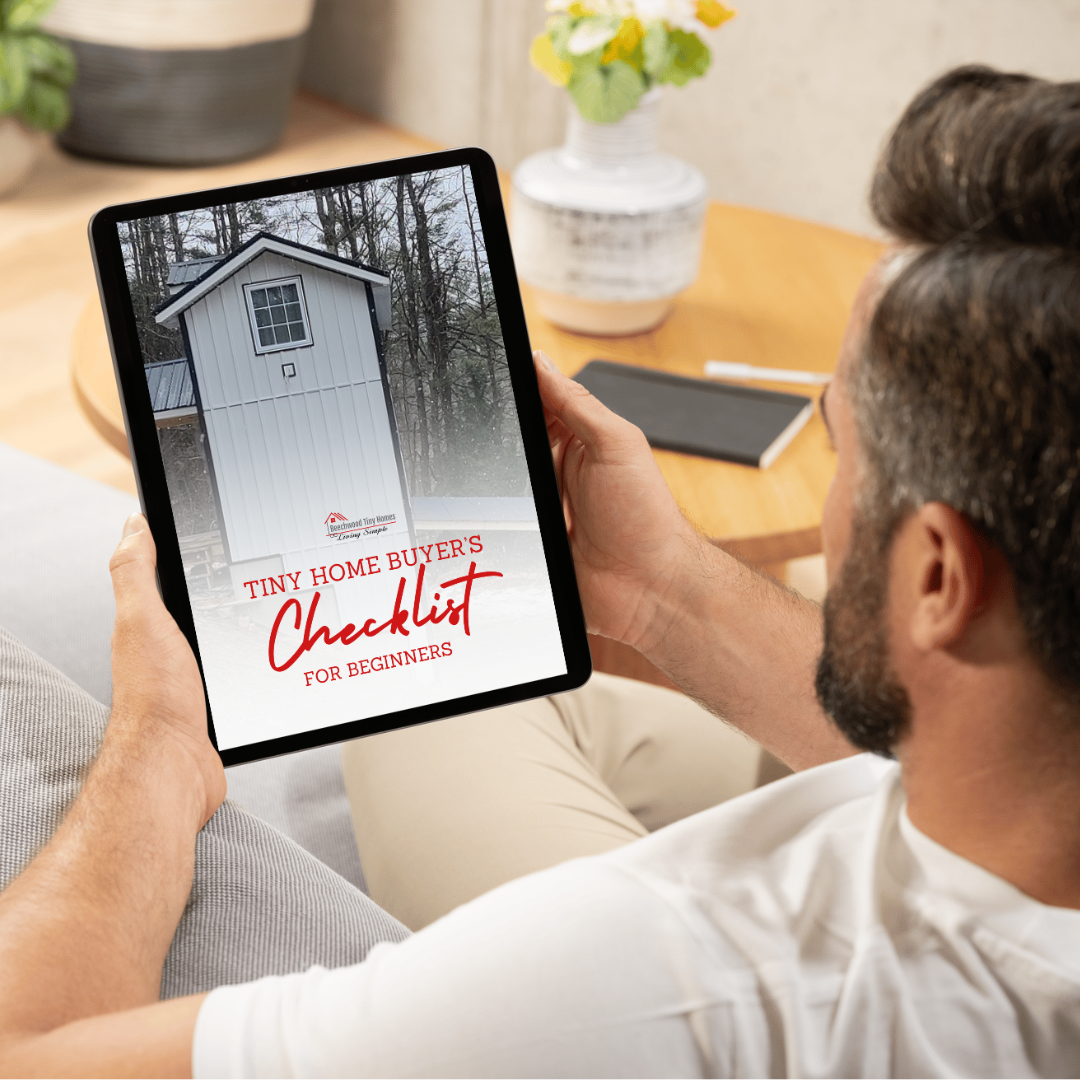
Dreaming of a tiny home but don’t know where to start? Our beginner-friendly checklist walks you through each step—from choosing the right home style to securing financing, finding land, and planning utilities. Make sure you’re fully prepared to embrace the freedom, simplicity, and sustainability of tiny home living. Download the checklist now and turn your tiny home dream into reality!
Sign up below for your Tiny Home Journey Checklist!!
You should get immediate access to the checklist and a link will be emailed to you.